The Leader Blueprint: Lessons I Had to Learn the Hard Way
There comes a point in business where what got you here won’t get you there.
For a long time, I prided myself on being able to move fast, solve problems quickly, and keep everything pushing forward. And to be fair, that works, in the early stages.
But as the business grows, that same approach starts to become the bottleneck.
I’ve had to learn that the hard way.
The truth about growth
I can drive things forward quickly. That’s always been one of my strengths.
But scaling a business requires a completely different version of leadership.
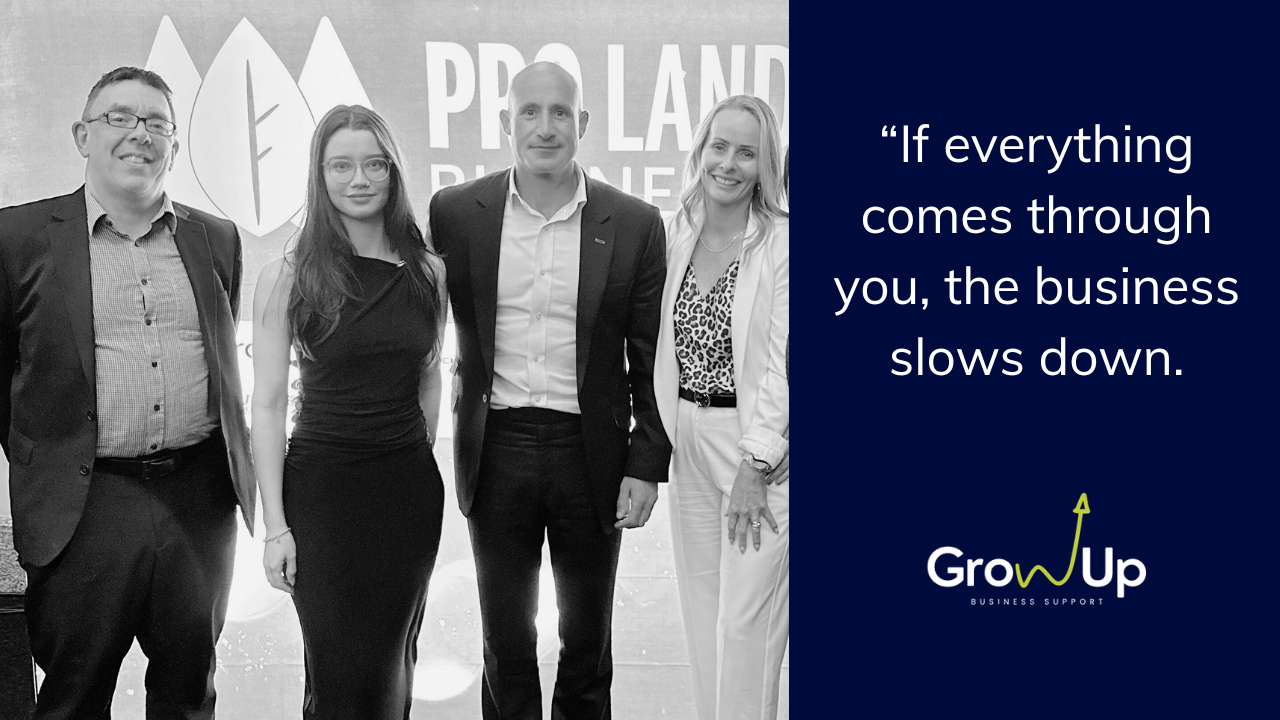
Because if everything comes through me, the business slows down.
It doesn’t matter how capable you are, there’s a limit. And when you hit it, the whole business feels it.
That was one of the biggest realisations for me:
Being constantly busy is not the same as making progress.
You can be working flat out, making decisions all day, solving problems left and right, and still be the reason things aren’t moving faster.
People don’t just need motivation
Another shift I’ve had to make is how I support the team.
It’s easy to think people need motivation. A push. Encouragement. Energy.
But what they actually need is:
Clarity
Standards
Ownership
Without those, motivation doesn’t stick.
If people don’t know exactly what’s expected, what good looks like, and where responsibility sits, things drift. And when things drift, they come back to you.
That’s where most leaders get trapped.
The dependency problem
The business feels strong when you’re in control of everything.
But that strength is fragile.
Because the moment you step away, things slow down or stop.
I’ve had to accept this:
The business gets stronger when I stop being the answer to everything.
That doesn’t mean stepping back completely, it means building people and systems so the business can operate without constant input.
That’s where real scale comes from.
The non-negotiables that changed everything
To move out of that reactive, overloaded way of working, I’ve had to put structure in place, and more importantly, stick to it.
These are the non-negotiables I now operate by:
Set 3 clear priorities each week, not 12
Keep a consistent weekly leadership rhythm
Review a scorecard every Monday with owners and numbers
Make 1:1s structured, consistent, and expected
Delegate outcomes, not just tasks
Set standards clearly — and hold them
Stop solving problems the team are capable of owning
Build leaders around me, not dependence on me
Protect time to think, not just react
Make accountability part of the culture
None of this is complicated.
But the discipline of doing it every week, that’s where the difference is.
The biggest shift: understanding the role
This is probably the most important lesson of all.
There are different modes of leadership, and confusing them creates chaos.
Founder mode is doing
Getting stuck in, solving problems, making things happen.
Leader mode is building
Developing people, setting direction, creating ownership.
MD/CEO mode is designing the system
Stepping back, building structure, ensuring the business runs without you.
For a long time, I was operating mostly in founder mode, even as the business grew.
And that creates tension:
You’re needed everywhere
Decisions pile up
The team relies on you
Growth becomes harder, not easier
The shift comes when you start to recognise:
Your role is not to do more, it’s to build something that does not depend on you.
What changes when you get this right
When leadership is shared, something powerful happens.
The business becomes calmer.
Not slower — calmer.
Decisions are made without everything escalating.
People take ownership instead of waiting.
Problems get solved closer to where they happen.
And you, as the leader, get space.
Space to think.
Space to plan.
Space to actually lead.
Final thought
This isn’t something you fix overnight.
It’s a shift in how you see your role.
But once it clicks, everything changes.
The more clearly I see the role, the calmer the business becomes.
And that’s where real, sustainable growth starts.